
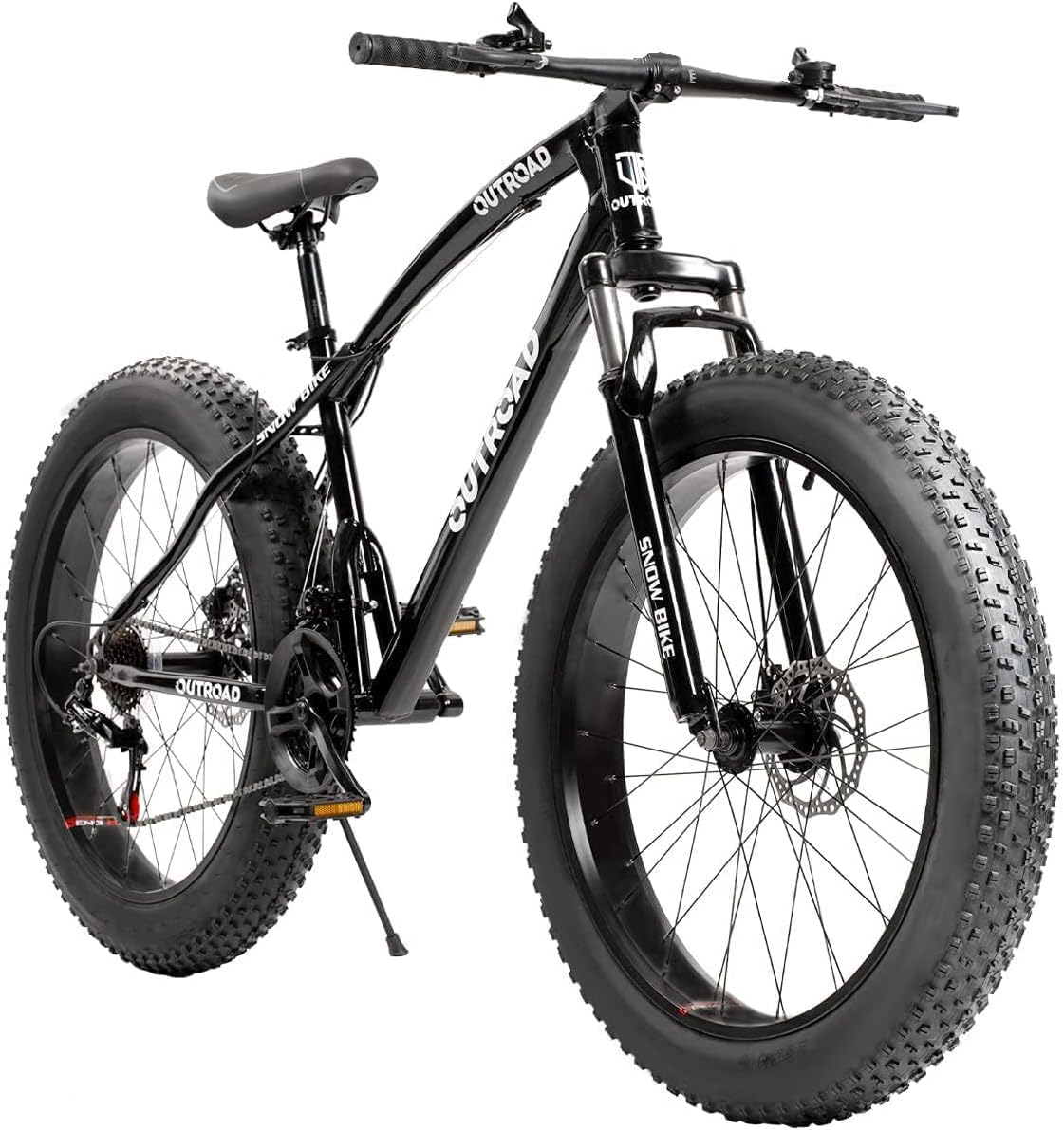
Few feelings in cycling compare to the sensation of cruising over a sun drenched ocean beach or gliding atop freshly fallen winter powder. Yet traditional bicycles, with their slender two inch tires, quickly bury themselves axle deep into loose sand or lose traction on snowy slush. To turn unpredictable wilderness surfaces into ridable terrain, cyclists around the globe rely on fat tire mountain bicycles. Characterized by oversized four inch wide knobby rubber, robust frame clearances, and heavy duty steel architectures, fat tire bikes represent the ultimate all season, all terrain exploration vehicle.
In this comprehensive guide, we delve into the physics of surface floatation, examine tire pressure management across seasonal climates, analyze frame geometry demands, and detail the technical qualities that make Outroad fat tire mountain bikes the top value choice for enthusiastic adventurers.
The Physics of Floatation: Why Four Inch Tires Dominate Difficult Ground
The core scientific principle separating fat bikes from standard cross country bicycles is contact patch distribution. When a cyclist weighing one hundred and eighty pounds sits upon a standard mountain bike with tires inflated to forty pounds per square inch, the actual rubber surface touching the ground measures only a few square inches. This results in intense ground pressure per square inch, slicing downward through loose grains of sand or crusty snow until the tire sinks into a rut.
When you transition to an Outroad four inch wide fat tire, the surface area increases by more than three hundred percent. Because the weight is distributed over a wide footprint, the ground pressure drops dramatically. Instead of cutting downward, the tire floats smoothly across the surface. This floatation effect enables riders to pedal effortlessly along sandy ocean shores, muddy riverbanks, and groomed winter fat bike trails where conventional bikes cannot travel ten feet without stalling.
| Riding Condition | Ideal Tire Pressure (PSI) | Terrain Characteristics | Primary Riding Strategy |
|---|---|---|---|
| Deep Soft Snow | 6 to 8 PSI | Powdery, unpacked winter trails | Stay seated to maintain rear tire weight |
| Coastal Sand Dunes | 8 to 10 PSI | Dry, shifting beach sand | Maintain smooth circular pedal strokes |
| Mud & Wet Forest Dirt | 10 to 14 PSI | Slippery mud puddles, wet roots | Rely on shoulder knobs for cornering |
| Hardpack Trails & Asphalt | 16 to 20 PSI | Dry gravel roads, paved bike lanes | Higher PSI reduces rolling friction |
Tire Pressure: The Secret to Infinite Suspension Customization
Experienced fat bike riders understand that tire pressure functions as an adjustable, pneumatic suspension system. Because four inch tires contain an enormous volume of air, small adjustments of just two pounds per square inch drastically alter the bicycle behavior and shock absorption.
In snowy winter conditions, dropping pressure to seven pounds per square inch allows the tire to sag slightly, conforming to the contours of icy footprints and snowpack. The tire acts like a snowshoe, contouring around small obstacles rather than bouncing off them. Conversely, when commuting on dry paved streets to work, inflating the tires to eighteen pounds per square inch firms up the rubber casing, decreasing rolling resistance and allowing you to maintain brisk eighteen mile per hour speeds with minimal pedaling resistance.
"A digital low pressure tire gauge is the single most valuable accessory any fat bike owner can carry. Calibrating your pressure for specific trail conditions transforms a punishing, bumpy slog into a floating, cushioned joy ride."
Frame Metallurgy and Clearance: Why High Carbon Steel Excels
A fat tire mountain bike carries significantly higher rotating mass than an ultra lightweight road bike. When hitting rock gardens or dropping off trail ledges, the forces transmitted through the rear chainstays and front fork crown are immense. To withstand these cyclic shock loads, Outroad manufactures frames using heavy gauge aviation high carbon steel.
High carbon steel offers tremendous tensile strength and natural elasticity. Under severe bottom out impacts, the steel frame absorbs and disperses energy without developing the hairline stress fractures that plague cheap welded aluminum alloys. Furthermore, Outroad designs custom widened rear stays and a wide bottom bracket shell to ensure generous tire clearance. Even when your four inch tires accumulate thick clay or packed wet snow, the wide clearance prevents debris from wedging between the rubber and frame tubes.
Front Suspension vs Rigid Forks: Which Is Right for You?
Prospective fat bike buyers often debate whether front suspension is necessary given the generous cushioning provided by four inch tires. While rigid forks remain popular for winter only snow cycling, an active front suspension fork unlocks true year round trail versatility:
- Rock and Root Absorption: When barreling down steep, rocky summer descents, tire floatation alone cannot absorb sudden high speed drops. An active suspension fork absorbs large vertical impacts, protecting your wrists from stinging impacts.
- Steering Precision in Corners: A suspension fork keeps the front tire planted firmly against the terrain during aggressive cornering, preventing the front wheel from skipping outward across washboard corrugations.
- Upper Body Comfort: On extended three hour trail sessions, front suspension absorbs repetitive high frequency trail chatter, significantly reducing arm pump and shoulder fatigue.
Double Disc Brakes: Essential Stopping Power in Extreme Elements
Riding through coastal saltwater spray, winter road salt, and muddy woodlands quickly renders traditional rim brakes completely ineffective. Wet sand quickly grinds down rubber brake pads, while slush freezes on aluminum rim sidewalls, eliminating friction when you pull the brake levers.
For this reason, every Outroad fat tire mountain bike features front and rear mechanical disc brakes with perforated steel rotors. Because the rotors are mounted at the center of the wheel hubs, they remain elevated above deep puddle water and shoreline sand. When you pull the brake levers, the steel calipers clamp down with authority, delivering instant, dependable stopping leverage regardless of freezing slush or soaking rain showers.

Choosing the Correct Drivetrain: The Value of 21 Speeds
Pedaling a stout four inch wide tire through shifting sand or up a muddy mountain incline demands generous gear reduction. Outroad equips its fat tire lineup with a multi speed gear train featuring a triple front crankset and a wide range rear freewheel, providing twenty one distinct gear ratios.
When you encounter a steep sandy dune, shifting down into your ultra low granny gear allows you to maintain continuous forward momentum without burning out your quadriceps or dismounting to push. When transitioning onto open paved pathways, shifting into high gear allows you to cruise swiftly and maintain pace with conventional city commuter bicycles effortlessly.
Essential Gear and Seasonal Maintenance Tips
To keep your Outroad fat tire mountain bike performing at its peak across four seasons, adopt these essential upkeep practices:
- Post Ride Freshwater Rinses: If you ride along ocean beaches or through winter streets treated with road de icing salts, immediately rinse your frame, chain, and disc rotors with gentle fresh water to prevent salt corrosion.
- Chain Lubrication Selection: Use synthetic wet lubricant during rainy spring and snowy winter months to resist water washout. Switch to dry wax based lubricant during dry summer sandy riding to prevent sand grains from sticking to your chain rollers.
- Spoke Tension Monitoring: Wide rims and heavy tires generate significant lateral leverage during hard cornering. Check your wheel spokes every few months to ensure uniform tension and true wheel rotation.
- Fastener Torque Verification: Periodically check handlebar bolts, pedal threads, and quick release skewers to ensure all hardware remains snug and secure.
Conclusion: Year Round Freedom on Outroad Fat Tires
A fat tire mountain bike is not merely a seasonal novelty; it is an indestructible pass to year round cycling freedom. When winter storms lock conventional bicycles inside dark basements, an Outroad fat tire rider embraces the snowfall and explores silent, pristine winter landscapes. Check out the complete lineup of Outroad Fat Tire Mountain Bikes and explore our full bicycle collection to begin your all terrain journey today.