
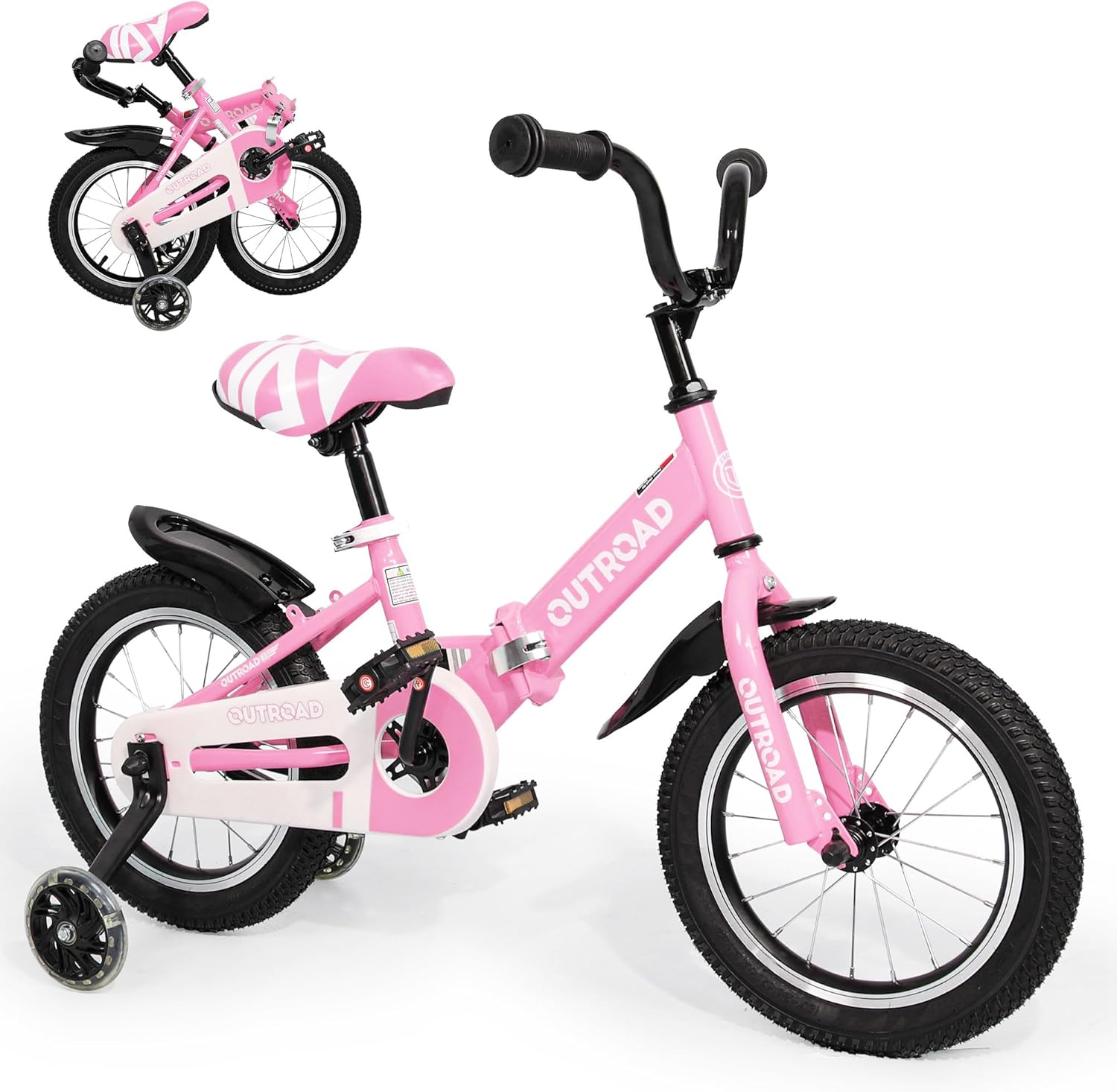
Few childhood memories rival the thrill of pedaling a bicycle independently for the very first time. It is a milestone that unleashes boundless outdoor exploration, self reliance, and healthy cardiovascular fitness. Yet for conscientious parents, purchasing a child first bicycle can feel bewildering. With countless wheel diameters, ambiguous age suggestions, and safety concerns, many parents make the common mistake of buying a bicycle that is too large, hoping their child will grow into it over future seasons.
Buying an oversized bicycle is one of the most hazardous mistakes a parent can make. An oversized bike is heavy, unwieldy, and prevents young riders from planting their feet flat on the pavement during unexpected stops, destroying their riding confidence. In this comprehensive guide, we provide an authoritative sizing blueprint, examine critical safety engineering standards, and show how Outroad kids bicycles nurture safe, joyful riding progression from toddlerhood to elementary school.
The Golden Rule of Kids Bike Sizing: Wheel Diameter Governs Fit
Unlike adult bicycles which are sized by the vertical length of the frame seat tube, children bicycles are classified primarily by wheel diameter. The diameter of the wheel determines the overall frame proportions, pedal crank length, handlebar reach, and center of gravity height.
A child must always be able to straddle the top tube with both feet planted completely flat on the ground while maintaining at least one inch of clearance between their groin and the frame. Furthermore, when seated upon the saddle in its lowest setting, beginner cyclists must be able to touch the balls of both feet firmly to the pavement to feel safe and in control.
| Wheel Diameter | Typical Child Age Range | Child Height Range | Average Inseam Length |
|---|---|---|---|
| 14 Inch Wheels | 3 to 5 Years Old | 35 to 43 Inches (89 to 109 cm) | 16 to 20 Inches |
| 16 Inch Wheels | 4 to 7 Years Old | 40 to 48 Inches (102 to 122 cm) | 18 to 22 Inches |
| 18 Inch Wheels | 6 to 9 Years Old | 45 to 54 Inches (114 to 137 cm) | 21 to 25 Inches |
| 20 Inch Wheels | 8 to 12 Years Old | 48 to 60 Inches (122 to 152 cm) | 23 to 27 Inches |
How to Accurately Measure Your Child Inseam at Home
Never rely solely on your child age or clothing tag sizes when selecting a bicycle; children experience rapid and uneven growth spurts. The most reliable measurement is your child true standing inseam:
- Have your child put on their typical riding sneakers and stand with their back against a flat wall.
- Place a hardcover book between their legs, sliding the spine of the book gently upward against their pelvic bone until it mimics sitting on a bicycle saddle.
- Using a tape measure, measure the distance from the top edge of the book spine straight down to the floor.
- Compare this inseam measurement to our sizing chart above to pinpoint the exact wheel diameter required.
"A properly sized bicycle gives a child instant mastery. When their feet can touch the ground easily, fear vanishes, balance takes over naturally, and learning to ride without training wheels happens in days rather than months."
Critical Safety Engineering: Enclosed Chain Guards and Brakes
Young children lack the situational risk awareness of experienced adults. Loose shoelaces, fluttering dress hems, and curious little fingers naturally gravitate toward moving mechanical parts. Federal CPSC safety regulations mandate specific safeguards that Outroad takes to an elevated standard of durability.
Every Outroad kids bicycle features an impermeable, full wrap protective chain guard. The durable polymer guard completely encloses the front drive sprocket, the drive chain, and the rear cog. Even if a child accidentally catches their shoelace near the pedal crank, the chain cannot snag fabric or pinch skin. Furthermore, the guard shields clothing from greasy chain oil, keeping young riders clean after neighborhood play sessions.
Braking Systems Designed for Small Hands
Adult caliper hand brakes require substantial finger reach and grip leverage that young children simply do not possess. If forced to use stiff adult levers, children struggle to stop in time before road curbs.
Outroad engineers our youth handbrakes with short reach brake levers. The levers sit close to the rubber handlebar grips and feature light tension internal return springs. A five year old child can easily wrap small fingers around the lever and apply sufficient leverage to bring the bicycle to a prompt, controlled halt. The rear wheel combines this with a dependable coaster brake or drum system, allowing children to stop instinctively by simply pedaling backward.
The Transition from Training Wheels to Independent Balance
Training wheels provide foundational security while a young toddler learns the concept of pushing pedals in circular motions and steering with handlebars. However, relying on rigid training wheels for too long can hinder the development of dynamic two wheeled balance.
Outroad heavy duty training wheels feature reinforced steel mounting arms that resist bending during aggressive sideways leaning. Here is the recommended three phase progression to remove training wheels effortlessly:
- Phase 1 (Basic Pedaling): Adjust training wheels so they touch the ground firmly on both sides, letting your child master steering and pedaling rhythm without any tipping fear.
- Phase 2 (Developing Balance): Elevate both training wheels half an inch above the ground. As your child rides across smooth asphalt, the bicycle will lean slightly side to side, forcing their brain to make subtle steering corrections to balance on two wheels.
- Phase 3 (Solo Flight): Remove the training wheels entirely, lower the saddle so both feet touch flat on the ground, and practice gliding down a gentle grassy slope. Within twenty minutes, most children transition to solo riding with zero tears.

The Innovation of the Foldable Children Bike Frame
Family outings to state parks, camping grounds, and ocean boardwalks are the highlight of childhood weekends. However, transporting two or three rigid kids bicycles alongside family luggage, coolers, and strollers quickly fills up vehicle space.
Outroad pioneered the foldable children bicycle. Using our proven high carbon steel center hinge clamp, parents can fold the entire bicycle in half within ten seconds. Two Outroad kids bikes can easily rest side by side in a compact sedan trunk, leaving ample room for suitcases and picnic baskets. You can bring your child favorite bicycle anywhere your family travels.
Conclusion: Building Lifelong Memories on Outroad
A child bicycle is far more than a recreational toy; it is their very first vehicle, granting them healthy outdoor independence and building indestructible confidence. By selecting the correct wheel diameter, demanding robust chain safety enclosures, and choosing versatile folding frames, you give your child the ultimate gift of active childhood memories. Browse our complete collection of Outroad Kids Bicycles or explore our full bicycle catalog to select the perfect model for your young rider today.