
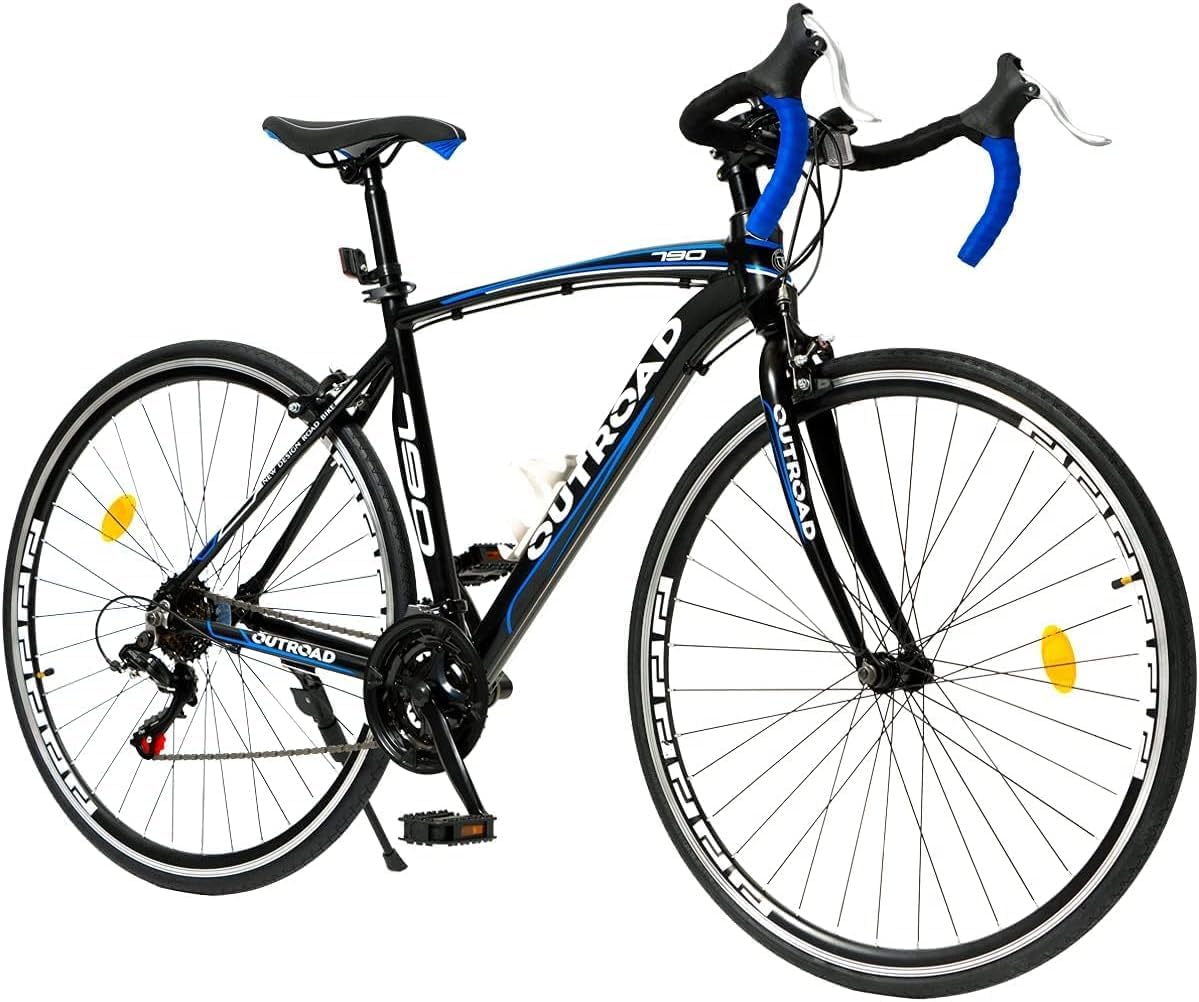
A finely tuned road bicycle is one of the most efficient machines ever conceived by human ingenuity. On smooth tarmac, a cyclist can travel four times faster than walking while expending a fraction of the metabolic energy. However, mechanical efficiency is not an accident; it is the direct consequence of precision mechanical tuning, clean chain lubrication, accurate derailleur alignment, and aerodynamic posture.
When a road bicycle suffers from skipped gears, rubbing disc calipers, or under inflated tires, you waste up to thirty percent of your leg power simply overcoming internal friction. In this comprehensive technical guide, the Outroad engineering staff breaks down the exact maintenance steps and shifting strategies necessary to keep your Outroad 700C road bike operating at whisper quiet speed.
The Anatomy of 21 Speed Multi Gearing: Ratios Explained
Modern road bicycles utilize a triple front chainring paired with a seven speed rear freewheel cassette. This yields twenty one theoretical gear combinations. However, understanding which combinations provide optimal chain alignment is critical to preventing drivetrain friction and premature wear.
The cardinal rule of multi gear cycling is avoiding cross chaining. Cross chaining occurs when you place the drive chain onto the extreme outer angles: for example, combining the smallest front chainring with the smallest outer rear cog, or running the largest front chainring with the largest inner rear cog. When cross chained, the chain enters the sprockets at a severe diagonal angle, causing noisy rattling, accelerated tooth wear, and frictional drag that drains your pedaling speed.
| Front Chainring Selection | Ideal Rear Cog Range | Riding Scenario | Cadence Objective |
|---|---|---|---|
| Smallest Inner Ring (Low) | Cogs 1, 2, and 3 (Largest) | Steep hill climbs, heavy headwinds | High cadence, 80 to 90 RPM |
| Middle Chainring (Cruising) | Cogs 2, 3, 4, 5, and 6 | Rolling city streets, gentle grades | Steady cadence, 75 to 85 RPM |
| Largest Outer Ring (High) | Cogs 5, 6, and 7 (Smallest) | Downhill descents, flat sprints | Powerful torque, 70 to 80 RPM |
Step by Step: Tuning Rear Derailleur Indexing in Minutes
If you click your handlebar shift lever and the chain hesitates, chatters between cogs, or jumps two gears at once, your rear derailleur cable tension requires a simple micro adjustment. You do not need expensive workshop stands or specialized tools; you only need your fingers to adjust the barrel adjuster located at the derailleur cable entry point:
- Shift to the Middle Cog: Lift the rear wheel off the ground, pedal with one hand, and shift your chain onto the middle rear sprocket.
- Diagnose the Hesitation: Observe where the noise originates. If the chain is attempting to climb up to a larger inner cog and rubbing against it, the cable tension is slightly too tight. If the chain is hesitating to shift upward when commanded, the cable tension is slightly too loose.
- Rotate the Barrel Adjuster: If the cable is too tight, turn the ribbed barrel adjuster clockwise one quarter turn. If the cable is too loose, rotate the barrel adjuster counterclockwise one quarter turn.
- Test and Confirm: Pedal the cranks and shift through all seven gears sequentially. Continue making quarter turn barrel adjustments until each click of the shifter results in an immediate, silent gear transition.
"Ninety percent of gear shifting complaints are resolved with a simple half turn of the barrel adjuster. Cable housings stretch naturally during the first month of riding; knowing how to compensate for this elongation keeps your bicycle shifting flawlessly forever."
Disc Brake Alignment: Eliminating Annoying Rotor Rub
Outroad equips modern 700C road bicycles with mechanical disc brakes for dependable stopping power in wet urban traffic. However, if a brake caliper becomes slightly misaligned, the stationary pad can lightly brush against the steel rotor, producing a rhythmic squeak and subtle rolling friction. Realigning your calipers takes under sixty seconds:
- Loosen the two Allen mounting bolts holding the brake caliper to the fork or frame until the caliper can wiggle freely side to side.
- Firmly squeeze the corresponding handlebar brake lever and hold it closed. Squeezing the lever forces the brake pads to clamp down centered over the rotor.
- While keeping the brake lever firmly squeezed, alternate tightening the two caliper mounting bolts evenly until snug.
- Release the lever and spin the wheel. The caliper is now perfectly centered over the rotor disc with zero rubbing friction.
Tire Pressure Optimization: Rolling Resistance vs Comfort
On high speed 700C road wheels, tire pressure dictates whether your commute feels like an aerodynamic glide or an exhausting, jarring battle against road bumps. Operating tires at inadequate pressures increases rubber deformation, drastically increasing rolling resistance and risking pinch flats when striking asphalt potholes.
For standard 700C commuter tires, maintain inflation between seventy five and eighty five pounds per square inch for a rider weighing one hundred and sixty pounds. Heavier riders should add five pounds per square inch to prevent tire deflection. Check your tire pressure weekly using a floor pump equipped with an accurate pressure gauge, as high pressure tubes naturally seep a small amount of air through microscopic rubber pores over seven days.

Chain Care: The Single Most Effective Watts Saving Habit
A gritty, unlubricated chain can sap fifteen to twenty watts of your muscle effort. Road grit adheres to sticky factory grease, transforming your chain into an abrasive cutting paste that grinds down expensive cassette teeth and chainring sprockets.
Adopt the simple two minute weekly chain wipe: wrap a clean cotton rag around the lower span of your chain, hold it firmly, and spin the pedals backward for twenty full revolutions until the exterior side plates are shiny and clean. Apply one small drop of quality synthetic bicycle chain lubricant to each interior roller pin. Let the lubricant penetrate the roller bearings for five minutes, and then wipe the exterior of the chain vigorously with a clean rag. The lubricant should reside inside the rollers where metal rubs metal, never on the exterior plates where it attracts road dust.
Aerodynamic Body Positioning: Free Speed on the Commute
Once your Outroad road bike is mechanically silent, your own body presents the remaining eighty percent of total aerodynamic drag above fourteen miles per hour. Leveraging the multi position drop handlebars unlocks substantial speed advantages:
- The Tops (Handlebar Center): Best for climbing steep hills at low speeds where wind resistance is negligible and upright chest expansion aids deep lung breathing.
- The Hoods (Brake Levers): The most versatile position for city traffic, providing instant access to brake levers while keeping your back at a comfortable forty five degree angle.
- The Drops (Lower Curved Bars): When sprinting to beat a changing traffic light or cutting into a stiff headwind, drop your hands into the lower curves. Bending your elbows lowers your torso, reducing frontal surface area by twenty five percent and boosting your speed by two to three miles per hour with zero extra effort.
Conclusion: Speed, Precision, and Reliability on Outroad
Mastering basic maintenance transforms your relationship with your bicycle. When your derailleur indexes crisply, your disc brakes bite silently, and your 700C tires roll with optimal firmness, your daily commute becomes the highlight of your day. Discover the full fleet of Outroad Road and Commuter Bicycles or explore our complete bicycle catalog to elevate your speed today.